
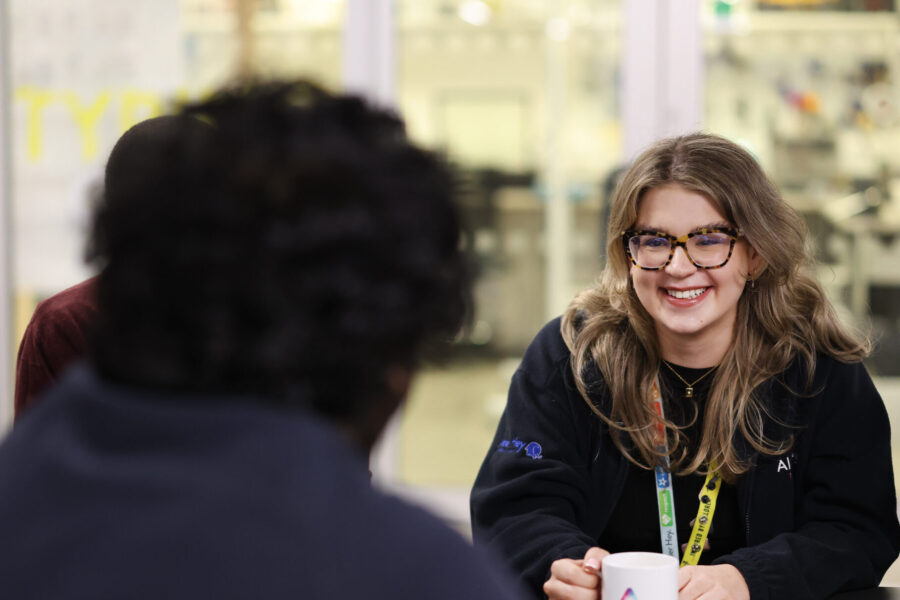
Have you ever tried to juggle while walking on a treadmill, only for someone to hand you “contracts”, “data governance” and “user alignment” mid-stride? That’s healthcare innovation and honestly, I LOVE IT!
I’m Megan Foden, an Innovation Consultant, Associate Programme Manager and Design Lead at Alder Hey Innovation. My job is all about designing better healthcare experiences, not just better products. I work with clinicians, staff, children, young people, families and industry partners to explore real needs, test new ideas and help translate possibilities into something that could genuinely improve children’s lives.
What Healthcare Innovation Really Looks Like in the NHS
People imagine innovation as building robots or inventing the future. In reality, it’s often about stopping great ideas from slipping through the gaps, between teams, approvals, workloads and the classic “we’ve always done it this way”.
If I could describe Alder Hey Innovation in one way, it would be as a theatre. Children, young people and their families are the main characters. Clinicians and the NHS system are the stage and crew. Industry partners are the ones who bring new scripts
This is the reality of paediatric healthcare innovation in the NHS, where ideas need structure, safety and collaboration to succeed.
My job? To help put on the show, without anyone getting crushed by the scenery.
I bring design thinking, clarity and structure to messy problems so we can uncover what’s really needed and test new ideas safely in a paediatric environment.
My Three Modes
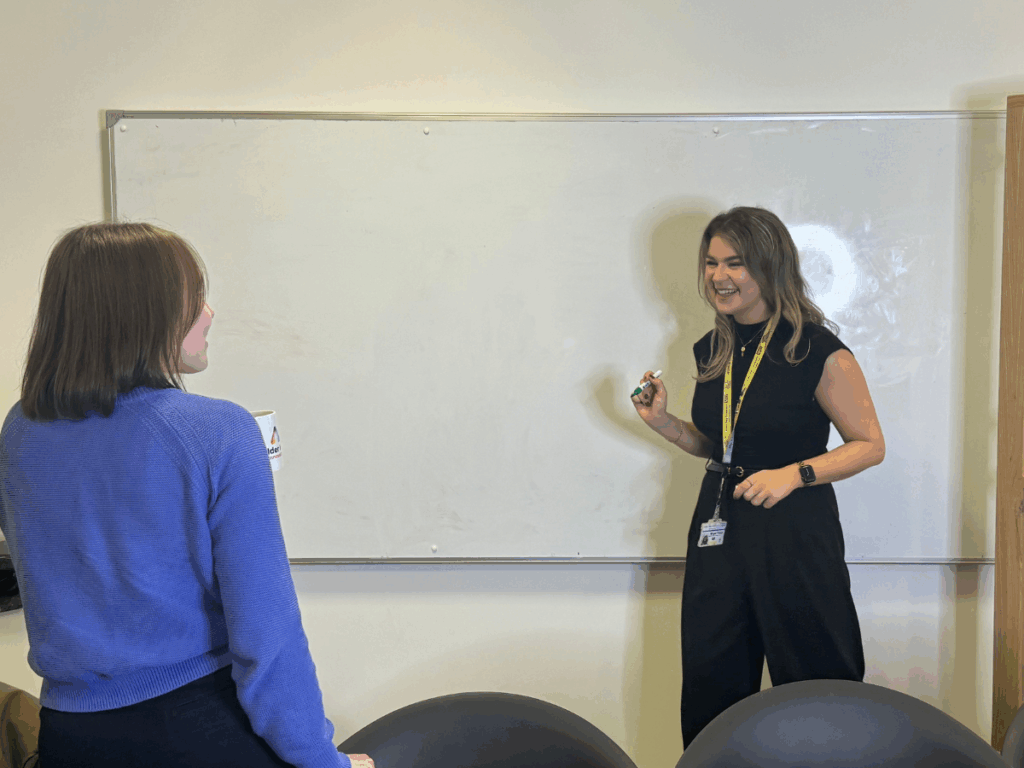
I think the easiest way to explain my job is that I spend my time switching between three modes.
Detective
I run workshops, interviews and discovery sessions to understand the real challenges. People often ask for dashboards or new tools, but the real issue might be bottlenecks, duplication or confusing workflows. My job is to dig deep and find out what the real challenge may be.
Translator
Healthcare, industry and families all speak different languages. I translate between them so that projects make sense, feel realistic and move forward. Innovation rarely fails from lack of ideas. It fails from confusion.
Builder
This is the practical design work, mapping pathways, shaping pilots, defining success and creating visuals that make ideas feel real. Sometimes innovation needs enthusiasm, sometimes structure and sometimes just the right PowerPoint slide.
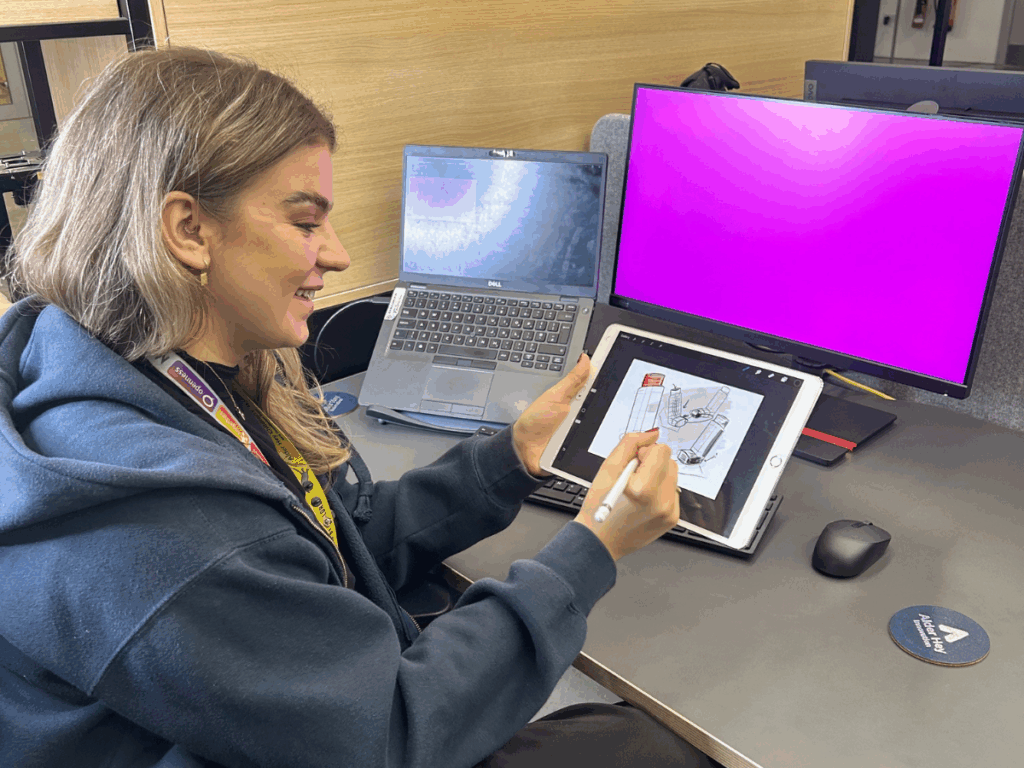
These three modes help me support innovation projects in the NHS, from early stage discovery through to real-world testing.
Work I’m Excited About
One big focus is the Paediatric Open Innovation Zone (POIZ), a clearer, safer way for industry partners, start-ups and NHS teams to explore and test child-focussed innovation with real clinical insight.
If innovation programmes were theme parks, POIZ would be the entrance gate helping everyone find the right path. POIZ gives us a repeatable way to move from “interesting idea” to “real experiences” for children and families.
I’m also involved in a wide range of early-stage conversations, helping to answer one key question:
“Could this actually work in the NHS and how would we test it?”
Why I Work in Innovation
For me, innovation is hope with a plan.
Children’s healthcare is full of extraordinary people, working under intense pressure. Improving care means more than coping mechanisms, we need better systems, clearer processes and tools that genuinely help.
Innovation isn’t always a big breakthrough. Sometimes it’s reducing anxiety for families, giving staff the right information at the right time, or simply removing unnecessary steps so people spend more time caring and less time fighting the system.
When you solve the right problem, you feel it immediately. You feel it in the confidence, workflow, relief and the calmness of families who suddenly feel supported.
Why Design Thinking Matters
I’m a product Design Engineer at heart, so design thinking is my default operating system. It’s like having a satnav; it won’t remove the traffic, but it stops you driving confidently in the wrong direction.
Design thinking helps us to listen properly, test assumptions early, stay focussed on the human experience and avoid over-engineering the wrong solution.
In paediatrics, where clinical care is emotional as well as medical, design thinking matters deeply.
What’s Next
I’m excited about continuing to build innovation capability at Alder Hey. I don’t just mean delivering projects, I mean building the foundations and culture that let innovation scale. I want to help create an environment where staff feel supported to explore new ideas, where partners understand how to work with the NHS properly, and where children and families are meaningfully involved not as a tick box but as a real part of shaping better care.
If innovation is the future, I want the future to feel thoughtful, inclusive, and genuinely useful. I want it to feel like something we build with people, not something we impose on them.
And if along the way we can make the process a bit more energising, a bit more playful, and a bit more human, then that feels like innovation too.
– Megan